It's summer in the upper-Midwest, and for those of you like me, you want to seize this precious 6 weeks and cram in as much outdoors time as possible.
When it comes to "drive-in" camping, one doesn't have to put much thought into what beer to bring: if it fits in the cooler, it works. When it comes to day-hikes, backpacking, or boating, however, one has to plan a little better.
With hiking, beyond the obvious concern of weight going in (glass is heavier than cans), you have to consider the weight coming out. With hiking or boating, you certainly don't want to leave your trash behind (or toss it in the lake), so whatever you "pack in" you'll have to "pack out." This again, suggests that canned beers are the preferable hiking beers. Finally, bottles break. You don't want broken glass in your pack or in your boat. Bottom line: start looking for cans.
Unfortunately, many, if not most craft beers fail to offer their wares in cans. Fortunately, there are some craft offerings that are both delicious and canned.
BEER ON THE BRAIN'S 2010 HIKING/BOATING BEER GUIDE:
1. Dale's Pale Ale - Oskar Blues (Colorado)
Oskar Blues was the pioneer in canning craft beer. Since 2002, Dale's Pale Ale, Oskar's signature ale, has been offered only in cans.
This American Pale Ale has a nice citrus/grapefruit hops nose and a slightly sweet bready malt body. It's bitter, with a clean hop finish that's perfect on a hot sunny day. Lots of flavor, but not too heavy.
2. Surly Cynic - Surly Brewing (Minnesota)
Surly is a staunch advocate of canned beer, choosing to release their entire line of award-winning craft brews in cans.
The Cynic is a Saison/Farmhouse style ale and pours a rich vibrant gold. You can smell some Belgian-style yeast notes as well as some coriander and spice. The beer has a medium body, smooth, with the perfect level of carbonation. Being Surly, there are a bit more hops in this one then you'll find in others of the same style. Great for a hot day. If you can find a better Saison in a can, well, if can find another Saison in a can, you'll be lucky.
3. Brew Free or Die IPA - 21st Amendment Brewery (California)
Although founded in 2000, 21st Amendment has only recently found its way out the Midwest. We're happy it made it out here. With a six hop punch in the nose, and a nice balanced malt back, their IPA is another solid offering from the Left Coast. Bonus for us flyover-land hikers and boaters? It comes in a can and is generally cheaper than the aforementioned beers.
Honorable Mentions:
Fat Tire - New Belgium Brewing (Colorado)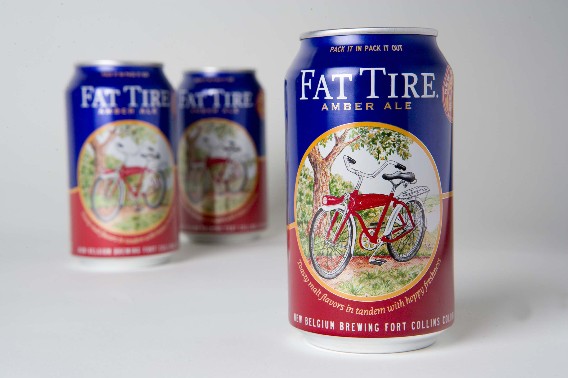
New Belgium's flagship is also available in a can. Surprisingly, should you take the time to pour one out, it tastes better out of the can, then out of the bottle! This is no coincidence. As Bon Appetit puts it, "New Belgium adds a slurry of active live yeast to its Fat Tire cans just before sealing to take up oxygen and prevent stale off-flavors. The result is a fresher, more complex beer. Think of it as a mini keg."
Hamm's Lager - Hamm's (Wisconsin)
It might be owned my MillerCoors now, but those of us in the "Land of Sky Blue Waters" still know that a Hamm's tastes great out on the canoe. Lest you think I'm succumbing to nostalgia and clever marketing, Hamm's won the gold for best American Lager at the Great American Beer Festival in 2007.
Tuesday, June 22, 2010
Pack It In


Monday, February 2, 2009
Beer of the Week - Victory in Pennsylvania
 I purposefully withheld the BOTW a day or two in the hopes that I could give a timely nod to this brewery. The Steelers did not disappoint.
When one thinks "brewing culture," several states in the US might come to mind: California, Oregon, Colorado, Wisconsin, but probably not Pennsylvania. For those who know, Pennsylvania has been a hotbed of brewing culture since this nation was still a group of colonies.
Victory Brewing of Downingtown keeps Pennsylvania's rich heritage alive with a full slate of quality brews. From a delectable Belgian style blond, to a premium pilsner, Victory's slate runs the gamut, keeping quality high throughout.
Our BOTW is a year-round brew, an accurately named ale called Hop Devil. I'm generally leery of any beer that has "hop" in the name, but perhaps I should alter my prejudice, having been wowed by beer the likes of Hop Whore, Hop Slam, and also Victory's Hop Wallop.
If you need a classification beyond "ale" I guess I would call it an APA. Drinking it yourself is probably a better way for you to find out exactly what it's all about.
The drink starts with a punch to the palette, bringing those grapefruit you smell to life. Beyond the citrus, there is also a bit of a "grass" taste that really rounds the citrus into a spicy, earthy, tangy hop experience. The German malts don't get lost in this little demon; they hold their own, giving the beer a smooth mouthfeel and a clean round finish.
When you sit down to drink almost any Victory product, be careful. If you're anything like me you'll have the thought..."Man, I could drink 8 of these." While drinking 8 is not advised, sampling all of Victory's wares is.
Victory? Win.
Friday, April 25, 2008
Beer of the Week
 My god, this winter has been so goddamn long that I'm starting to lose it. I feel like I live in Canada, except that I don't have guaranteed health care and I never got good at hockey. It's a good thing that Minnesota has finally started cranking out some decent brews to get us northwoods faithful through.
Flat Earth Brewery, a new St. Paul brauhaus that I mentioned back here, has been quietly invading bars and liquor stores around the Twin Cities Metro. Last night I had the good fortune to share a few pints with a good friend at the Sample Room, a Northeast Minneapolis institution of which Chef and TV Personality Anthony Bourdain had this to say:
that's another good one. I'm sure his business model wasn't, 'There's a huge demand here for traditionally made pâté, so I'm opening!' It was more like, 'I love pâté, I want to make it old-school, I'm going to create the market and hopefully people will join me.'
Indeed the Sample Room prides itself on its homemade and interesting foodstuffs, and takes equal care to make sure their taps are interesting and fresh. As a local, fresh, and delicious brew, Flat Earth's Belgian Style Pale Ale made the cut.
The beer pours a clear and beautiful amber color with a minimal white head that leaves considerable lacing along the way.
The beer has a faint yeast smell mingling with a sweet fruit aroma. It has a very dynamic nose that refuses to fade as one is drinking the beer.
A medium body ripe with tight bubbles awaits you as you quaff the ale, greeting you with a little yeast up front, some carmelly biscuity malts in the middle, and very subtle finishing hops in the back. The malts will hang on until the finish, but the final taste is quite dry, with notes of grain.
The alcohol is a touch low for the style at 5.2%, but that makes this beer all the more chuggable, with enough flavor to keep you coming back, but not too much as to overwhelm the senses.
Congrats to Flat Earth.
Links of Interest:
Flat Earth
Friday, January 25, 2008
Beer of the Week
 Our beers of the week here have been heavily focused on American brewers, mainly from Wisconsin and California, but our friends across the pond invented the brewing game, and certainly can still make a proper ale.
Fuller's brewery, properly known as Fuller, Smith, & Turner, is headquartered in West London's Chiswick district on a site where beer has been produced for over 350 years. FS&T produce a wide variety of award winning British styles, including their flagship "London Pride," a "London Porter," and our BOTW, "Fuller's ESB." If you need a refreshment on ESBs, we discussed them back here.
Fuller's ESB has always been a good beer to quaff during winter, as it was actually introduced as a winter beer in 1971 to replace a now defunct beer called Old Burton Extra. ESB has all the elements of a good winter brew: a solid ABV at 5.5% (strong for a British draught), a strong malt base, and noticeable but balanced hop back (in this case the traditional Kent Goldings and Fuggles hops).
The beer pours a rich beautiful deep amber color with a minimal white head that fades away, but leaves a white ring throughout. It has a rich toasted biscuity maltiness, even revealing a hint of Oktoberfest-like caramel. For a member of the pale ale family, this bitter doesn't have much bitter bite. The hops are there, but you can tell they've been used more so for flavoring than for bittering. The mouthfeel is smooth and creamy with just the perfect amount of carbonation to let the flavors shine. I recommend getting it on tap when you have the chance.
Very British, and very excellent.
Links of Interest:
Fuller's
Thursday, November 1, 2007
Pale Ale, Pt. III
Two days ago we started our exploration of the genesis and development of the pale ale world, which included the development of the India Pale Ale (IPA). We followed that up yesterday with an IPA recommendation, a Burton brewers overview, and an introduction to English Bitter. Today we continue on our IPA-like voyage to unravel the term pale ale, talking more about bitters, and the American pale ale (APA).
As I mentioned yesterday, bitters are less common stateside, and are sometimes found masquerading as a plain "ale" or simply as an "ESB;" however, bitters, both in name and style can be found.  Nestled between downtown Minneapolis and the University of Minnesota is Town Hall Brewery. Town Hall is a bar-lovers bar. It has lots of dark wood, a proper food selection, beer specials, a huge scotch selection, pool by the hour, and a great patio. Additionally they have a few good brews. The West Bank Pub Ale is so named for a section of the city on the west side of the Mississippi River, and it used to go by the name West Bank Bitter. While it is perhaps more hoppy than other "mild" ales, it has a nice malt balance. It has an alcohol content of 4.6% (which might fall into the "best" category of bitters in the UK) and is what Town Hall calls their "session beer" (you can have a few and not get totally munted). The beer has smooth medium bodied mouthfeel, and is a rich copper hue. If you're in Minneapolis, swing by Town Hall for an American example of an English bitter, and try the award winning Oatmeal Stout while you're there.
So where does the APA fit into this?
Knowing the brashness and ingenuity of Americans, it should come as no surprise that American brewers would not be content to simply adopt the brewing traditions of the old countries...not without a few tweaks that is. Early Dutch and English brewers brought over their traditions of ales and porters, but later, Central European immigrants did the same. Brewing innovation in the mid-19th century brought the pale lager and pilsner to the fore, and the popularity of this beer spread from Germany and Bohemia all over Europe and to the United States. These pale lagers began to dominate the US market and could be produced easily using indigenous grain like corn. Towards the end of the 20th century, the early traditions of American ales had all but vanished. Simultaneously, consolidation and taxation were doing a number on the other side of the pond, and British ale crafters were disappearing or producing low alcohol bitters. The ale traditions of early America were in serious jeopardy: enter the California ale revolution.
The San Francisco based Liberty Ale mentioned in yesterday's column was Anchor Brewery's attempt at a real ale. First produced in 1975, it emerged as one of the first (if not the first) known examples of a commercially successful ale produced in the US in quite some time. Just a few years later in 1980, a brewery in Chico, California produced what would become what many consider the prototype of the APA, Sierra Nevada Pale Ale.  Sierra Nevada Pale Ale has a truly American flare, using Cascade hops, giving the brew a dry, floral character, without the carmelly malt back of a British pale ale. This unabashed "in-your-face" hop flavor is a characteristic of the APA, which is drawn in part from using native hops. Sierra's is in the middle of the color range for what you might find in an APA, and has been a huge commercial success. Sierra Nevada has since expanded their brewing facilities and produces many other quality brews including an IPA and a Porter. Breweries like Anchor and Sierra Nevada helped prompt the huge agricultural boom of hops in the Willamette and Yakima valleys, further expanding the possibilities for unique American ales.
APAs are almost synonymous with the craft brewing explosion of the last twenty years, so go to your local beer depot and find a local example. For a Midwestern example, try the Great Lakes Burning River Pale Ale, made in Cleveland. It's not my favorite, as many of the West Coast breweries do it better, but it's worth a try.
Links of Interest:
Sierra Nevada Pale Ale
Great Lakes' Burning River
Wednesday, October 31, 2007
Pale Ale, Pt. II
Yesterday we began our dissection of the term "pale ale" with a brief history of the emergence of the term, and subsequent tweaking to get India Pale Ale (IPA). I mentioned at the end of the article that legendary brewer Bass had copied Hodgson's pale ales to gain access to the Indian market (in part due to loss of the Baltic market because of the Napoleonic War). "But wait," you might say, "Bass doesn't taste like an IPA. It might be a pale ale, but it tastes more like a North American Amber Ale." Well read on dear beer-lover, there are explanations for this.
First, to quote the old Olympia slogan (a low-rent beer from the Pacific Northwest that was eventually bought by Miller and closed in 2003), "It's the water." Bass was brewed in Burton-on-Trent, where the water has a very high sulfate content. The nature of the hard water allowed Bass (and others) to use high hop levels without getting a piercing bitterness. According to brewingtechniques.com: The secret to the Burton brewers' success came from the water, an ingredient often downplayed in beer recipe formulation. The sulfates of the Trent basin helped the Burton beers achieve their clarity and bitterness and allowed the Burton brewers to far exceed Hodgson's India Ale in clarity, hopping rate, and marketability. The high sulfate content allowed brewers to use hopping rates well beyond that compatible with the carbonate water of London. Sulfates actually change the mouthfeel and perception of bitterness. High sulfate content results in a sharp, clean bitterness, unlike the harsh clinging bitterness of highly hopped beers brewed with water high in carbonates.
Second, while IPAs have shown a considerable boom in the United States in the last 20 years, there is some varience within the style, and thus some varience in the American thought of what an IPA is. Additionally, modern British IPAs are not really true IPAs at all, and are in fact more like English bitters. More on bitters later, but first you're probably getting thirsty. Allow me a suggestion for what I think is a good representation of what these original IPAs were. A balanced IPA that is high in hop aroma and alcohol, yet has some malt complexity to balance it out, is Anchor's Liberty Ale. Introduced in 1975, this San Francisco based beer is between gold and amber in color, and uses top fermenting ale yeast. Additionally the beer is dry-hoppped, with hops added to the brew during maturation, a process that was often done in the old days for insurance against microbes before a long sea voyage. Despite the dry-hopping, this isn't a "hop for the sake of hops" brew, as it is just slightly sweet, balanced with malt and a nice diversion from the hop-bomb ales of the West Coast. Put this one somewhere between Bass, and the American hop-drop kick. Now back to the story.
With IPAs emerging as their own style, there needed to be an easy differentiation between these pale ales and the beer being produced for the English domestic market. While many brewers continued to market their pale ales, pubgoers came up with a new name to separate them from IPAs and the Burton exports: bitter.
The term "bitter" for a type of beer grew directly out the development of pale ale. The pale ales produced for sale at home were generally lower in alcohol and hops than their IPA counterparts, and didn't need the maturation process that an IPA did. They were "running" beers and could be served after just a few days in a cellar. Somewhere in the middle of the 19th century, the terms pale ale and bitter were used interchangeably in the UK.
As bitters evolved into an entity onto themselves, variations emerged within the style. Bitters can be almost as dark as a stout, or approaching a golden ale, although they are generally a deeper bronze or copper color. There are best bitters, special bitters, and extra special bitters (ESB), which ususally signifies different alcohol levels. There is no general agreement as to what constitutes "ordinary," "best," or "extra special," in bitters, and there can be varience from brewery to brewery.
Bitter is used much less frequently in the US versus the UK (although ESBs are easy to find), and generally refers to a pale ale with a lower hop content than the typical American pale ale (APA).
More on bitters and APAs tomorrow.
Links of Interest:
Anchor Brewing
www.brewingtechniques.com
Tuesday, October 30, 2007
IPA, APA, ESB, WTF? (Pale Ale, Pt. I)
With so many beers out there claiming to be “pale ale,” how does one know what to expect in a brew? There are India Pale Ales, American Pale Ales, Extra Pale Ales, Bitters, the list goes on. In the next couple of installments, we’ll get to the bottom of the history and stylistic variants of the pale ale, and offer some recommendations too.
The matriarch of this family of beer can be traced back to England, where brewers were looking to develop a more consistent and paler variety of ale. Unfortunately, the wood kilns used to roast malts often produced off-flavors and very dark malts. When coke was produced from coal in the 18th century, it allowed for a high heat pale malt that could be produced consistently. These original pale ales were a notable departure from the sweet English brown ales, as well as the dark porters, and were enjoyed by drinkers as far back as the 1750’s.
An export problem created the first split in the pale ale family tree, when British brewers were trying to overcome the long shelf life and resistance to temperature fluctuations that would be needed in brew headed to their tropical colonies, especially India. Continual rocking and high temperatures were not friendly to British browns and porters, not to mention chugging a porter in the Indian heat doesn’t sound all that appealing, does it? Shipping rates to colonial India were low (thanks in part to the value of silk and spices that could be shipped back), so the brewers that came up with a solution to the sea voyage would be rewarded handsomely with profit.
The solution was found in brewing a pale ale that had a higher alcohol content and more hops, which made it inhospitable for microbes. The beer also matured during the long voyage, giving it a flavor all its own. This recipe tweak is purportedly attributable to George Hodgson, who was subsequently copied by many brewers, including the legendary pale ale brewery Bass, and the India Pale Ale, or IPA, was born.
More splits in the pale ale tree to come tomorrow. Stay tuned!
