Since we did not have a beer of the week to guide us over the St. Patrick's holiday weekend, let me offer some suggestions on the day of Green itself. The First Leaf of the Clover: Avoid "green" beers unless you're trying something organic. Green beer is only good if you're interested in seeing a sorority girl make bright green vomit.
 The Second Leaf of the Clover: Avoid Killian's "Irish" Red. It's so Irish that it's made by Coors in Colorado. Don't let that sellout Killian fool you; his family hasn't made that beer in decades.
 The Third Leaf of the Clover: Avoid Finnigan's "Irish" Ale. Made with Potatoes? Do you know why the Irish ate so many potatoes? Because they had to. Have you been to Dublin recently? I think their economy is doing well enough to leave the potato thing behind. At least it's made in St. Paul which is a little more Irish than Colorado.
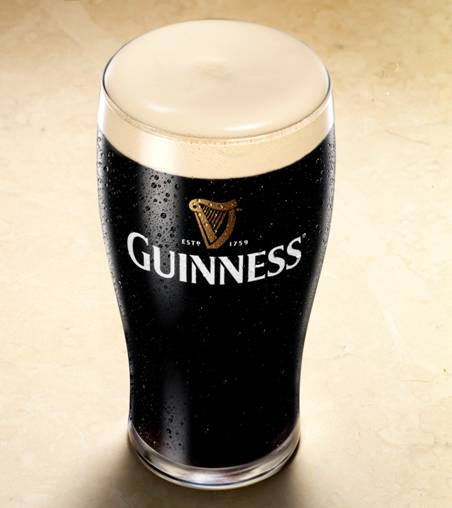 The Fourth Leaf of the Clover: Stick with a few pints of the black stuff. Guiness has single-handedly made stout the most known beer style behind a lager. They've been doing it for over 200 years and have brought Guiness to the far reaches of the globe. Its relative low alcohol and calorie content make it the original session beer: you could have 8 imperial pints and still not fall off your stool, but yet, the medium-light body is full of creamy stout flavor.
Take a cab, and Éirinn go Brágh
Monday, March 17, 2008
Beer of the Weekend


Friday, January 18, 2008
Beer of the Week

It's been a big beginning of 2008 for me: I got engaged, I was offered a large law school scholarship, the Packers are in the NFC Championship. So it's only fitting that this beer of the week is equally big.
Sprecher Brewing, originally from Milwaukee but now in a suburb, is perhaps best known for a soda of all things. Their root beer is known far and wide, and rightfully so; it's delicious.
But this old-world style brewery offers much more than just pop. They have a delicious dark lager called "Black Bavarian," a decent Oktoberfest, and an excellent amber lager, simply known as "Sprecher Amber." But none of these beers are "big" enough to be this week's BOTW. We need something big, something strong, something that reeks of old brewing lore. I turned to a rare offering from the brewery: Czar's Brew, Russian Imperial Bourbon Stout.
I love a good imperial stout. This beefed up version of a English stout featured high alcohol and hops content to preserve the brew for its long sea voyage through the Baltic. Coming in at 11%ABV, Czar's Brew certainly lives up to the "unapologetically strong" aspect of the imperial Stout.
The beer is black, but not as thick as I was expecting, much thinner for example than Leinenkugel's Big Eddy Imperial Stout or Fuller's Breakfast Stout, which both pour like motor oil. In fact, if I had one complaint about the beer, it's that it's too thin.
The head is small but persistent, and leaves some lace on the glass. It's not as dark as the heads on the aforementioned stouts either.
The nose is amazing: bourbon, wood, chocolate, berries, it's all there. Some bourbon barrel beers smack you in the face with whisky aroma, but this one blends it nicely. Some styles are better suited for bourbon aging, and stouts are definitely one of them.
The mouthfeel is thin as well, and slightly dry. At 11% the alcohol dries the taste a little, but it isn't overpowering. A semi-sweet chocolate taste and bourbon mix and mingle.
This definitely a bold beer, and I would buy it again, but if I could offer some suggestion to the brewer, it needs to be a little bit thicker and it's way overpriced. It's going to be hard to find this one out there; there were only 1000 liters produced. It's expensive, but compare the experience you'll have drinking it to that of a fine wine, and you'll be more accepting of the price.
Monday, December 10, 2007
Beer of the Weekend

I was sick on Friday, so there was no Beer of the Week to be had, but in lieu of that, I have a special BOTWE.
I'm hardly one to recommend a beer from a large macro like SABMiller (now MillerCoors), but Miller's 140 year old, Chippewa Falls, WI based subsidiary Leinenkugel's can squeeze by my normal regulations.
Although Leine's was acquired by Miller in 1988, which was then subsequently added to the SABMiller empire later, Leinenkugel's is the seventh oldest brewery in the country, and is still brewed in Chippewa Falls (and Milwaukee), and still run more or less by the family. Were it not for the infusion of Miller marketing dollars, and the brewery's willingness to innovate, it might have been one of those sad stories of regional breweries I write about in the Pabst Americana Series. As it stands, Leine's is available in 38 states.
I'm not a huge Leine's advocate; in fact, out of their 7 year round brews, I dislike 5 of them, and of their seasonals, "Big Butt," a doppelbock, is the only one to stand out.
The second in the "Big Eddy" series, however, is a standout. So named for the stream that fed the original brew house, Leine's foray into specialty release territory started with the Big Eddy IPA. The second, released within the last month in select markets (Milwaukee, Madison, Detroit), is the Big Eddy Russian Imperial Stout.
I talked a little about Imperial Stouts back here, so refresh your memory if need be. This Big Eddy pours like motor oil, with a thick tan head that emerges after you pour, with some remains lingering throughout. True to form, Leine's Russian has a high alcohol content, and three different varieties of hops, both used to preserve this style of beer for its long sea voyage over the Baltic. The alcohol certainly comes through in the nose and on the tongue, giving this brew a big mouthfeel and a dry finish. It smells faintly of bourbon. Although alcoholic, the flavor is dominated by sweet malts, with hints of maple and black cherry. The coffee flavor common in stouts is there, but it's not overpowering.
Leinenkugel's Big Eddy series is a step in the right direction, and the Russian Imperial Stout is a worthy beer. It's not really brewed to be paired with food, so enjoy it on its own, perhaps paired with a cold winter afternoon.
Links of Interest:
Leinenkugel's
Thursday, October 18, 2007
Wisconsin on Tap
As mentioned here, Amber and I recently went to a beerfest called Wisconsin on Tap in Wisconsin Dells. It was part of their “Harvest Fest,” and honestly, it would not have been worth it to venture up there if there weren’t 27 microbrewers to accompany the pumpkin painting, goat petting, and craft buying.
Overall, the beerfest was great. I thought the idea of a Wisconsin only fest was a good one, and there were breweries from all over the state, from Milwaukee to Superior. The lines were never long, the vendors were friendly, and in case of rain, the stands were all covered under a massive tent. There were also a mustard tasting as well as a cheese tasting, which were nice touches of Wisconsin culinary tradition, and a nice break from the suds as well (pacing oneself is key, people; chug in moderation).
As part of the beerfest, they passed out rating cards, so all participants could rate the brews available. It was a cool idea, but the cards did not include any of the special tappings, not to mention that the beers listed were often not the ones available, or the listed beers were assigned to the wrong brewery. Fortunately we were prepared with our own notebook to rate and remember the beers and breweries.
Before we give out the full list of our ratings, I wanted to talk stout before to prep our fine readers for our winner, our favorite beer of the fest: Delafield Brewhaus’ Czar’s Choice Bourbon Stout.
Russian or Imperial Stouts were first brewed in England, and featured a high alcohol and hops content to help preserve the beer for its long sea voyage to the Baltic. The style nearly died out after the Bolshevik revolution, when exporting to Russia halted and production was switched to the domestic market. The beer no longer matured in barrels along the voyage, instead being immediately thrust onto the market. Apparently this did little to advance the beer as a style, and it faded away until being picked up by Samuel Smith’s.
Delafield’s Czar is indeed a “beefed up” version of an English sweet stout, and is aged for 12 months in a barrel as well, in this case, a bourbon barrel. Now I don’t think that the original imperial stout had the lactose in it that Delafield’s does, but the brew had a heavy coating body, and was sweeter than most stouts, almost mimicking the sweetness one would find in a wheated bourbon like Maker’s Mark. The combination of the bourbon taste with the milk stout sweetness is what really set this brew apart for us. It was smooth and heavy, with a complexity added by the bourbon that would be impossible to replicate. This is not a beer one has with dinner; this is a beer one has as desert. Our congratulations go out to Delafield Brewhaus. They’re located about halfway between Madison and Milwaukee, right off of Interstate 94. If you’re in the neighborhood, pay them a visit. They may not have the Czar’s Choice, but there are plenty of other beers to quaff as well.
Now without further ado, here is a complete list of our rankings, with 5 being the most delicious, and 1 being stagnant pond water. Anything 3 and above is definitely worth trying. Cheers!
Links of Interest:
Delafield Brewhaus
Samuel Smith's Imperial Stout
Ale Asylum
Moose Jaw Brewing
The Grumpy Troll
Delafield Brewhaus (Delafield) - Czar's Choice Bourbon Stout - 5
Ale Asylum (Madison) - Happy Ending Belgian - 4.5
Moose Jaw (Wisconsin Dells) - Dunkel Weizen - 4.5
Grumpy Troll (Mt. Horeb) - Spetsnaz "CCCP" Stout - 4.5
Ale Asylum (Madison) - English Porter - 4
Cross Plains Brewery (Cross Plains) - Esser's Best - 4
Great Dane (Madison) - Drop Anchor Steem - 3.5
Delafield Brewhaus (Delafield) - Oktoberfest - 3.5
Milwaukee Brewing (Milwaukee) - Pull Chain Pale Ale - 3.5
Cross Plains Brewery (Cross Plains) - Cross Plains Special - 3.5
JT Whitney's (Madison) - Heartland Weiss - 3.5
Furthermore Beer (Black River Falls) - Knot Stock Pale Ale - 3.5
Lakefront Brewery (Milwaukee) - Bourbon Cherry - 3
Great Dane (Madison) - Oktoberfest - 3
Great Dane (Madison) - American Pale Ale - 3
Sand Creek (Black River Falls) - Cranberry Ale - 3
Sand Creek (Black River Falls) - Stout - 3
BluCreek Brewing (Madison) - Wild Blueberry Ale - 3
Milwaukee Brewing (Milwaukee) - Louie's Demise Ale - 3
Grumpy Troll (Mt. Horeb) - Oktoberfest - 3
Furthermore Beer (Black River Falls) - Proper English Ale - 3
Pangaea Brewing (Wisconsin Rapids) - Lilja's Wisconsin Heifer Weizen - 2.5
Thirsty Pagan (Superior) - Gicchi Gummi Golden - 2.5
JT Whitney's (Madison) - Badger Red Ale 2.5
Great Dane (Madison) - Pilsner - 2.5
Tyranena (Lake Mills) - Bourbon Barrel Ale - 2.5
Pangaea Brewing (Wisconsin Rapids) - Lilja's Pulling Boat Pale Ale - 2
Furthermore Beer (Black River Falls) - Fallen Apple - 2
Furthermore Beer (Black River Falls) - Three Feet Deep Stout - 2
Stone Cellar (Appleton) - Ankle Biter Amber - 2
Delafield Brewhaus (Delafield) - American Ale - 2
Minhas Craft Brewery (Monroe) - Mountain Creek - 1.5
Minhas Craft Brewery (Monroe) - Lazy Mutt Farmhouse Ale - 1
Stone Cellar (Appleton) - Vanilla Stout - 1
Monday, October 15, 2007
Now that's a Stout Porter!
It was a good weekend for beer. Amber and I went to a beerfest in Wisconsin Dells called: “Wisconsin on Tap”. The event featured 27 Wisconsin microbreweries and Goose Island, a Chicago based brewery that got in on a technicality: they have “Wisconsin distribution.” I like some of Goose Island’s beers but we did not approve of them sneaking into a Wisconsin only beerfest, and didn’t drink any of their beers in silent protest. We’ll have a full review of the event later in the week, but to prepare you for some of the highlights I’ve decided to give some background on a type of beer perhaps less common than traditional ales and lagers, at least in the United States: stout.
When I first began drinking beer, I didn’t know that porters and stouts were essentially the same thing. I knew they were both similar in taste and appearance, but in my ignorance I assumed they were produced in different ways; although there are different types of stouts/porters, they are essentially of the same family.
Porters first arose in England sometime between 1730 and 1750, depending on who you ask. While some argue that the name porter came from the dark beer’s popularity among workers who carried food and goods through London, others dispute the authenticity of such notions, including Michael Jackson (the legendary beer critic, not the moonwalker). In any case porters were dark beers that generally used more roasted malts.
Brewers often made several different strengths of porter and would use certain adjectives to differentiate between the styles. Stout, long used as an adjective for “strong” beer, was used to designate strong varieties of porter. In fact, Guinness, perhaps the most well known stout in the world is a variety of porter. In 1799, the Arthur Guinness brewery stopped making ale and decided to focus efforts on its porters, one of which, the Guinness Extra Superior Porter, is the precursor of today’s Guinness Original and Guinness Extra Stout. Guinness produces dry or “Irish” stouts, but there are other varieties of stouts as well: imperial or “Russian” stouts, coffee, oatmeal, chocolate, milk and Baltic.
More to come on stouts when we discuss the Wisconsin on Tap beerfest. Now, go to your local Irish watering hole and enjoy some flavor and history by chugging a few pints of the black stuff (in moderation, of course).
Link of interest:
http://www.guinness.com
http://www.beerhunter.com/documents/19133-000041.html
http://wisdells.com/WisconsinDellsAttractions/autumnharvestbrewers.cfm
