With as much as I have to say about beer, I am inexperienced in the art and science of its creation. I merely sit on the sidelines, quaffing the rewards, throwing barbs and compliments towards people I don't even know. I am in essence, the equivalent of a theater critic, an armchair quarterback.
To broaden my both my figurative and literal palette, I decide it was time to make the jump into brewing myself.
I had inherited some brewing equipment from an old brewer, and bought some new pieces at my local homebrew store. I picked out some ingredients, enlisted the help of my fiance Amber, and my friend John, and off we went.
I had decided that my first attempt would be an American Style Amber Ale. It seemed that there was a lower probability of screwing that style up, and besides, Amber & I both love it. We steeped some speciality grains in the mix for some flavor and color, but the base of the brew was from extract. Eventually I'd like to get to all grain brewing, but for now, I'm letting the pros do the mashing.
We used Cascade hops for the bittering, and IPA lovers, it smelled wonderful as soon as it hit the wort. It changed the color of the mix and released a citrus smell throughout the kitchen. After letting the wort boil for an hour, it was time to cool it down and add the yeast. We used an immersion wort chiller and it worked like a charm. If you're an aspiring home brewer, I highly recommend the investment in this piece of equipment. I've heard that cooling in the sink or tub can take an hour; this took less than 15 minutes.
 After that we added distilled water to make up for some lost in the boil, and sealed it up. I'm happy to report that it's bubbling away in the basement and smells delicious. I'll report back on the process as it goes along.
Tuesday, August 18, 2009
Beer of the Weekend - My Beer


Monday, June 16, 2008
Beer of the Weekend
 There was no beer of the week last week, so of course, I have to deliver something special for the Beer of the Weekend. Well hold on to your hats, ladies and gentlemen, because I'm about to say the unthinkable:
Summit's Hefe-Weizen is better than this years batch of Bell's Oberon.
I'm no fan of Summit, and though truth be told, I think Bell's is a little overhyped, but Summit's Hefe this is year is truly tasty, and this year's Oberson is nothing special.
At first, I thought possibly it was just me; that maybe I was judging poorly, or maybe I got a few bad taps; however, after several Oberons on beautiful days, I have to admit that it's been better in the past. I'm not sure what it is, but it doesn't seem to have as much aroma, nor enough hops bite. Looking to the future, next year's may also suffer.
I still like Oberon, but Summit's Hefe is just a little better. It has a really nice fruity aroma, a properly carbonated body, hints of banana in the flavor, and a crisp hops finish. If I could make one critique, it's that the color is a little too light. It's still not of the magnitude of a Franziskaner, but it's darn good.
Links of Interest:
Summit Brewing
Monday, April 21, 2008
Beer of the Weekend
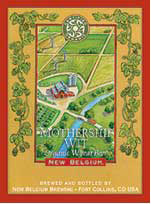 After a weekend of revelry, it was nice to enjoy Sunday on a beautiful rooftop deck in downtown Minneapolis. Of course, sharing the deck with some friends and delicious beer really took it to the next level.
I usually hold off on the Wits and the Hefe-Weizens until the weather gets truly sticky, but this has been a long hard winter, and a day in the sunshine called for a sunshine beer. The sunshine this week was provided by Mother Nature and Mothership Wit via New Belgium Brewing of Colorado, perhaps best known for their Fat Tire beer.
The Mothership pours a hazy yellow color with a minimal white head. It smells of corriander, typical of the style, with hints of orange and other citrus.
The beer is medium bodied with a crisp, tangy taste and a nice blast of carbonation. There are definitely hints of lemon and spice, an the brew finishes with a zip, slightly less sweet than a Hoegaarden.
Mothership is not the best Wit in the world, but it's damn good for an American version and another strong outing from New Belgium.
Links of Interest:
New Belgium Mothership Wit
Monday, April 14, 2008
Beer of the Weekend
 Due to another action packed week, I did not have time to write a proper BOTW, so you'll just have to accept another BOTWE in its place. Rest assured, this BOTWE was worth the wait.
Due to an anti-clerical attitude in France in the 19th Century, the Catsberg Abbey Community relocated into Belgium, just a few kilometers away from their original home. The monks acquired some land in the village of Watou, and set up shop worshipping God, and also making cheese. Apparently the monks missed their native soil, however, because when the religious climate improved, they decided to abandon the Belgian operations and return to France in 1934.
The cheese making had required the monks to set up a factory in addition to their abbey. When the monks left, the cheese factory was acquired by Evarist Deconinck and expanded.
After World War II, the monks of the Trappist monastery St. Sixtus, decided they wanted to commercialize their beer to reach a greater audience, and happened to meet with Mr. Deconinck. After some negotiation, they reached an agreement where the monks would brew beer within the abbey for themselves, and a few taverns in the immediate area that were associated with the monastery, while Mr. Deconinck would contract brew their recipe for consumers under license for a period of 30 years.
A brewery was constructed next to the cheese factory, and with a little help from the brewmaster of Westvleteren, the Sixtus beers were born.
The brewing agreement was renewed in 1962 for another 30 years, but was ultimately terminated in 1992 following the formation of the International Trappist Association (ITA). The ITA, an association of Trappist Abbeys insisted that to bear the Trappist name, the beer must be produced within the abbey. Rather than adopt the changes necessary to be labeled "Trappist" the commercial beer was renamed and is marketed under the St. Bernardus name in reference to the name of the Abbey founded by the original fleeing French monks, "Refuge de Notre Dame de St Bernard."
A recent addition to the St. Bernardus cannon is the Witbier. Created by legendary brewmaster Pierre Celis (the creator of Hoegaarden), the beer pours a cloudy light yellow color with a fine white head.
It has a distinct yeast smell mixed in with whiffs of lemon zest and coriander. The smell is actually quite noticeable, even after the initial pour.
The taste is an earthy spice in the front and malt and yeast in the back. I'm not sure exactly what the spice is, other than to say it has an earthy character like clove, but not exactly.
It's medium to light bodied and really smacks off the palette, almost too chugable. The carbonation is airy and the tartness is just enough to really notice before being smoothed out by the yeast.
This beer is new to me, and I've only had it in a bottle. I look forward to finding a bar with a beautiful patio and drinking this beer the entire summer. Cheers to St. Bernardus and Pierre Celis!
Links of Interest:
St. Bernardus
Monday, April 7, 2008
Beer of the Weekend
 Being that there was no Beer of the Week last Friday, we have to make it up to you loyal readers with a beer of exceptional quality from this weekend. To do so, I reached once again into the Belgian section of the local liquor depot and pulled out a selection that is both delicious and easily attainable.
Located in the town of Dinant, the Leffe Abbey was founded by the Premonstratensian Fathers in 1152 and was originally named the Abbey of Notre-Dame. The Fathers changed the name of the Abbey in 1200, drawing the name from the river near which the Abbey sits.
The monks have brewed ales on this site at least as far back as 1240, the date of the first written record mentioning the brewing activities. The brewing operations continued unabated until 1789, when French revolutionaries declared the Abbey property of the state. Although the Abbey was sold off here and there, brewing mangaged to continue on site until 1809.
After years of scraping by selling ink, incense and other trinkets, Father Abbot Nys met with brewer Albert Lootvoet and decided to restart the Abbey's brewing operation in 1952. Although since acquired by international brewing giant InBev, the Abbey still receives royalty payments for their famous brews.
Our BOTWE is probably the most easily procured of the Leffe portfolio, Leffe Blond.
The Blond pours a light Amber-Orange color with a nice tight white head. The smell is yeasty with a sweet smell reminiscent of ripe bananas.
This Leffe has a full mouthfeel, smooth, almost oily with the perfect amount of carbonation. I would call this medium-bodied, about where you'd expect a Belgain blonde.
The taste is slightly sweet, with a definite yeast presence; although, not to the extent of say, Unibroue offerings. You taste those bananas and perhaps pears, with a slightly bitter and spiced finish.
While some may not consider this a session beer, its relatively reasonable ABV (6.5%) and easy drinking medium-body make it ideal for sipping in the crisp spring air. It's not the best Belgian blonde you will ever have, but it definitely sets a standard.
Links of interest:
Leffe
Monday, March 17, 2008
Beer of the Weekend
Since we did not have a beer of the week to guide us over the St. Patrick's holiday weekend, let me offer some suggestions on the day of Green itself. The First Leaf of the Clover: Avoid "green" beers unless you're trying something organic. Green beer is only good if you're interested in seeing a sorority girl make bright green vomit.
 The Second Leaf of the Clover: Avoid Killian's "Irish" Red. It's so Irish that it's made by Coors in Colorado. Don't let that sellout Killian fool you; his family hasn't made that beer in decades.
 The Third Leaf of the Clover: Avoid Finnigan's "Irish" Ale. Made with Potatoes? Do you know why the Irish ate so many potatoes? Because they had to. Have you been to Dublin recently? I think their economy is doing well enough to leave the potato thing behind. At least it's made in St. Paul which is a little more Irish than Colorado.
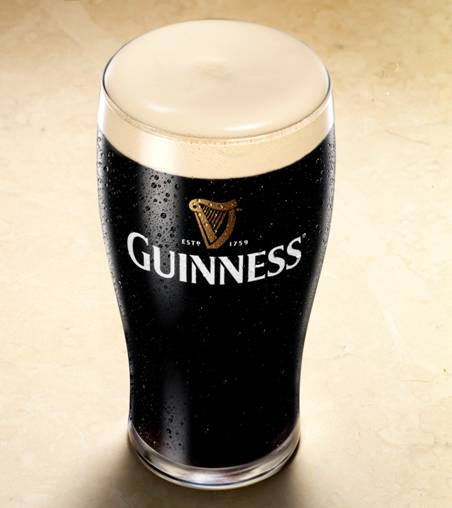 The Fourth Leaf of the Clover: Stick with a few pints of the black stuff. Guiness has single-handedly made stout the most known beer style behind a lager. They've been doing it for over 200 years and have brought Guiness to the far reaches of the globe. Its relative low alcohol and calorie content make it the original session beer: you could have 8 imperial pints and still not fall off your stool, but yet, the medium-light body is full of creamy stout flavor.
Take a cab, and Éirinn go Brágh
Monday, January 28, 2008
Beer of the Weekend

Winter is starting to wear on, as those of us in the upper Midwest have been treated to alternating thaws and snow storms. You might wonder what, besides severe drought, hurricanes and earthquakes, keeps us from moving to warmer climes. Well in Wisconsin, we have good friends and good beer to get us through, and I have found a delicious gift from Kulmbach, Germany to help us make it to April.
Kulbacher Brauerei produces a number of different brands, the one familiar to me being their EKU Pils; however, we're not here to talk Pilsner because obviously we need a little more than that to make it through the winter. Rather, let's talk about an Eisbock.
An Eisbock is similar to a regular doppelbock, except after lagering for an astounding nine months, a layer of ice is removed from the vessel, effectively concentrating the flavor and alcohol (11%) of the beer.
Kulbacher's eisbock is called "EKU 28," and is an outstanding example of an the style. The beer pours a light copper color, with a small head. The smell is very fruity, with hints of honey and caramel, and a slight tinge of alcohol. The mouthfeel is very creamy, with some of the carbonation mixing in, and amazingly, the alcohol is not very noticeable. I've had Belgians and barleywines this strong, and I have to admit, in comparison, the alcohol in this just disappears in the flavors. There are strong tastes of fruit, mostly raisins for me, and a syrupy sweetness that is just cut perfectly and subtly by alcohol at the end of the sip.
And sip you should. This beer is no joke at 11% ABV. I would have a few of these at the end of the night, maybe after a meal. I know from experience that this is not a beer you should wrangle with without a proper meal in you. Besides, it goes excellent as a post food digestive, or as we in Wisconsin might appreciate it, as a winter warmer.
Links of Interest:
Kulmbacher Brauerei (English)
PS: Thanks to Dane101.com for the link.
Monday, December 10, 2007
Beer of the Weekend

I was sick on Friday, so there was no Beer of the Week to be had, but in lieu of that, I have a special BOTWE.
I'm hardly one to recommend a beer from a large macro like SABMiller (now MillerCoors), but Miller's 140 year old, Chippewa Falls, WI based subsidiary Leinenkugel's can squeeze by my normal regulations.
Although Leine's was acquired by Miller in 1988, which was then subsequently added to the SABMiller empire later, Leinenkugel's is the seventh oldest brewery in the country, and is still brewed in Chippewa Falls (and Milwaukee), and still run more or less by the family. Were it not for the infusion of Miller marketing dollars, and the brewery's willingness to innovate, it might have been one of those sad stories of regional breweries I write about in the Pabst Americana Series. As it stands, Leine's is available in 38 states.
I'm not a huge Leine's advocate; in fact, out of their 7 year round brews, I dislike 5 of them, and of their seasonals, "Big Butt," a doppelbock, is the only one to stand out.
The second in the "Big Eddy" series, however, is a standout. So named for the stream that fed the original brew house, Leine's foray into specialty release territory started with the Big Eddy IPA. The second, released within the last month in select markets (Milwaukee, Madison, Detroit), is the Big Eddy Russian Imperial Stout.
I talked a little about Imperial Stouts back here, so refresh your memory if need be. This Big Eddy pours like motor oil, with a thick tan head that emerges after you pour, with some remains lingering throughout. True to form, Leine's Russian has a high alcohol content, and three different varieties of hops, both used to preserve this style of beer for its long sea voyage over the Baltic. The alcohol certainly comes through in the nose and on the tongue, giving this brew a big mouthfeel and a dry finish. It smells faintly of bourbon. Although alcoholic, the flavor is dominated by sweet malts, with hints of maple and black cherry. The coffee flavor common in stouts is there, but it's not overpowering.
Leinenkugel's Big Eddy series is a step in the right direction, and the Russian Imperial Stout is a worthy beer. It's not really brewed to be paired with food, so enjoy it on its own, perhaps paired with a cold winter afternoon.
Links of Interest:
Leinenkugel's
Monday, December 3, 2007
Beer of the Weekend

It was a good weekend to stay in here in the Midwest. After having to drink my sorrows away after the Packers lost to the Evil Empire (the Cowboys), and the bilzzard that hit Minnesota, Wisconsin, and Michigan, I needed some time to relax in the house.
Our BOTWE was definitely good for the described scenario; we chose Brother Thelonius belgian style dubbel from North Coast Brewing in California.
Brother Thelonius, so named for the legendary jazz musician, definitely comes in on the "big & sweet" side of Belgian brewing, with 9.2% ABV, and abundant sweet malts. It pours a dark reddish-brown color with a minimal head and minimal lacing. It has a dried fruit aroma typical of this style: a very nice nose actually. The mouthfeel is thick, but not as thick as some actual Belgians and has an alcoholic dry finish. It does lack some of the creaminess of the greats in this style, but it is damn good overall.
Congratulations to North Coast Brewing; Brother Thelonius is good company on a cold winter day.
Links of Interest:
North Coast Brewing
Monday, November 26, 2007
Beer of the Weekend

Due to the Thanksgiving holiday, I wasn't able to get you a Beer of the Week, so I was damn sure to get you a Beer of the Weekend.
Although the Oktoberfest/Fall season for breweries has come and gone, you can still find those straggler sixers here and there until well after Christmas. Lukcy enough for me I came across a leftover sixer of Left Hand Brewing Company's Oktoberfest.
Hailing from Longmont, Colorado, Left Hand takes its name from a English translation of a Native cheif's name, whose tribe wintered in the area. Although the brewery has been around since 1993, they did not even begin packaging in 12oz bottles until 1998 after merging with Tabernash brewery of Denver.
In addition to a their famous Sawtooth Ale, and a large selection of staples, Left Hand also produces several seasonals, including Oktoberfest. The beer is 6.0% ABV, and is dominated up front with sweet malts, like any Oktoberfest should be. It has a nice dry, clean back from the German Magnum and Vanguard hops, and is smooth and medium bodied. It doesn't have the caramel richness or malt complexity of some of the Germans, it's a bit more earthy and nutty, but it is a solid Oktoberfest and a worthy effort. Lucky for me Oktoberfest shoppers did not know of Left Hand's quality; now you do.
Link of Interest:
Left Hand Brewing Company
Monday, November 5, 2007
Beer of the Weekend

After a busy weekend, Sunday night was the perfect time to plop on the couch with Amber and the dogs, and enjoy our company. Sunday night is also the perfect time to enjoy our BOTWE, Unibroue's Don de Dieu.
Our first Canadian brewery to grace these pages, Unibroue is located in Montreal's francophone suburb of Chambly. I've been to Montreal, although not Chambly, but from what I understand, there is an old fort, Unibroue, and not much else there.
Unibroue's saga begins in Lennoxville, where Unibroue acquired shares of an existing brewer that was in financial trouble in order to bypass Quebec's tough restrictions on brewing licenses. Unibroue eventually gained all shares of the former brewer and then mergered the old brewery with Unibroue to create the brewery we know today.
In 1992, Unibroue became associated with a Belgian brewmaster, a nameless person described by the brewery as an "expert in producing beers on lees," that is, unfiltered beers with live yeast in them, which causes a refermentation (or completion of fermentation) that occurs in the bottle.
Don de Dieu is a triple wheat ale at 9% ABV that Unibroue has produced since 1998. It has a deep yellow color, just approaching light orange. The beer is very smooth, although the carbonation is noticeable, and is just slightly sweet with a fruity, malty body. The head of the beer was not as nice as I would have expected, eventually totally vanishing, although I would have to try it again to pass a complete judgement on that. I had mine with some spicy Asian noodles, and it paired ideal. I would imagine it would go equally well with spicy Latin flavors.
Unibroue makes many quality brews, so look for them next time you're in the beer depot, and make sure you try Don de Dieu, our Beer of the Weekend.
Tuesday, October 23, 2007
Beer of the Weekend
 Now that you have some background on Trappist beers, allow us to get personal with one in our "Beer of the Weekend" segment. BOTWE won't be a regular feature like BOTW, but it does give the authors a handy excuse to chug different beers at the end of a long work week.
Chimay is one of only six Belgian breweries that produce Trappist beers. Chimay is brewed by S.A. Bières under the supervision of the Abbey of Scourmont. Established in 1850, the beer is still brewed within the walls of the abbey and is bottled a few miles away.
Chimay produces three different beers as well as a smattering of cheeses. Of these beers, the nod to BOTWE goes to Chimay Grande Réserve, a.k.a. Chimay Blue. Chimay Blue is a strong hearty beer, clocking in at 9% ABV, with notes of roasted malts. The brew has a nice, somewhat floral bouquet, but it is not as pronounced as I would expect from a beer of this style. Blue is top-fermented (ale-style) and refermented in the bottle, and for ideal tasting, the beer is not pasteurized. Chimay blue is slightly sweet, but it has a nice acidity and bitterness on the back of the tounge, making it less sweet then some other similar Belgians.
Chimay is best served in a chalice-style (a.k.a. "Gourmet") glass, so that you can enjoy the aromas and color of the brew; however, if you're out hiking on a beautiful fall day with good friends, please don't hesitate to take our amateur advice and pass the bottle around.
Links of Interest:
Chimay
